

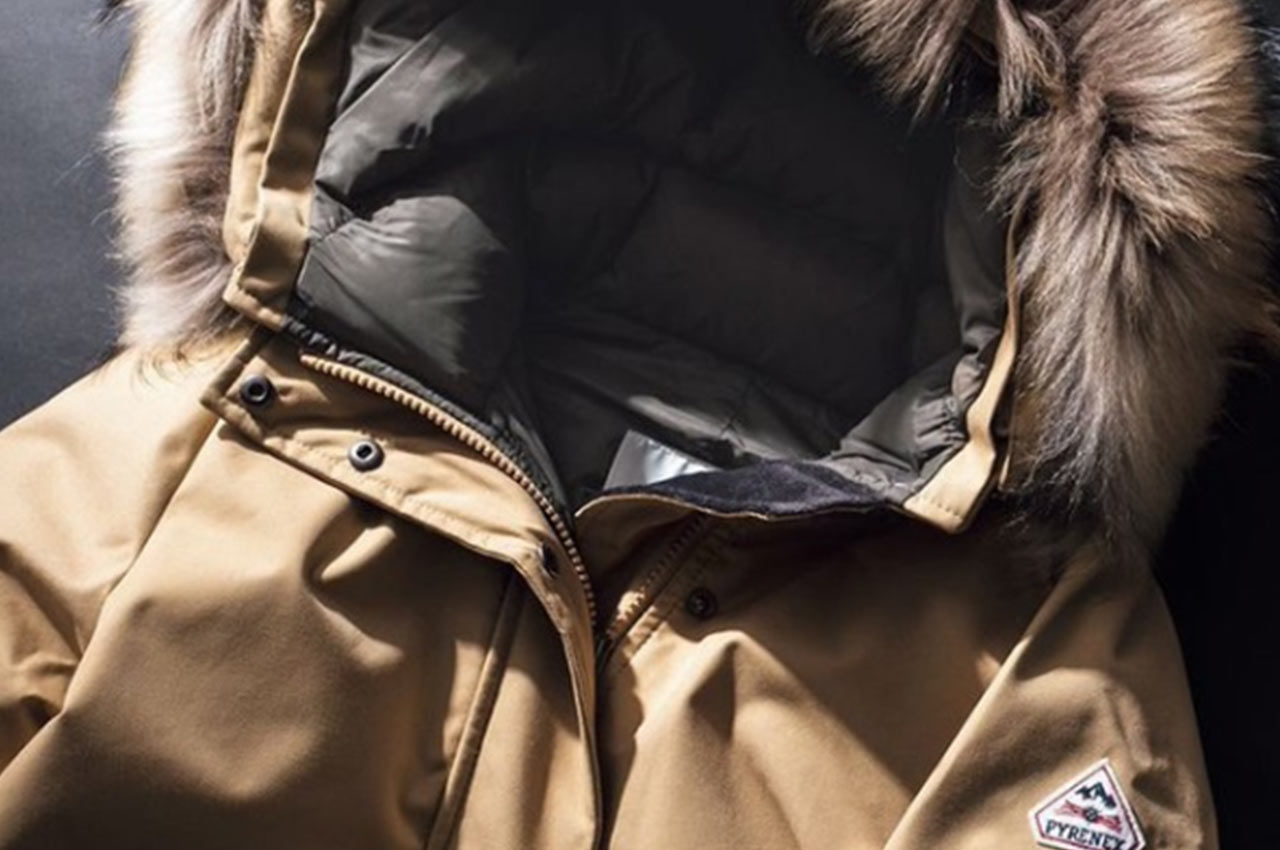
The cold weather is truly here. You're now bundled up in your favorite down jacket or parka. But have you ever wondered, "why is there fur around your hoods?" The La Canadienne team will explain all the details to you!
IMPORTANCE OF FUR
If you're asked about the presence of fur around your hood, most of you would say, "because it's beautiful"... In reality, the presence of fur around the hood of your down jacket or parka is not only justified by its design and fashion appeal.
Its primary mission is to provide the best protection against weather elements such as water, air, wind, and cold.
For decades, to protect themselves, Inuit tribes covered themselves as much as possible with materials that prevented the penetration of cold and water.
The fur lining your hood has the ability to create a true protective shield. It traps air between its hairs and thus prevents wind penetration. Fur does not freeze, unlike faux fur, because its hairs do not retain water. This is why fur is not waterproofed. It also has the ability to reduce heat loss from the body.

Arranged around the hood, the fur, with its different layers of hair, thus creates a microclimate that protects the face and allows condensation to be expelled outwards.
DIFFERENT TYPES OF FUR
You will most commonly find coyote or raccoon fur around your hood, especially from brands like Canada Goose, Nobis, Woolrich or Mackage. Other furs, such as fox, used by Moose Knuckles, or marmot; a masculine fur often used by Italian designers like Artico, will effectively protect against the cold. For the most effective protection, it is best to opt for thicker furs. The thicker your fur, the more effective the protection and thermal comfort will be.
Particularly effective for protecting against the most extreme temperatures, fur has been an ally against the cold for millions of years. This fur can come from farmed animals as well as trapped animals to regulate flora and fauna and support isolated human communities.
Fox fur
Fox fur is the most commonly used in the ready-to-wear sector. It is soft, elegant, and naturally resistant. With a fluffy and full appearance, fox fur remains beautiful and dense season after season. Fox fur is generally used and worked in its natural colors, making each parka unique.
Blue fox fur
Blue fox fur is extremely soft and full and is characterized by relatively short hairs. It is often used for dyeing because its original color is solid and very light. It is therefore quite easy to dye.
Silver fox fur
Silver fox fur is characterized by long, dense, and shiny hairs. Naturally black and white with silver highlights, it is very trendy.
Frost fox fur
Frost fox is a mixture of blue fox and silver fox; this results in hair that is shorter than silver fox but retains the same salt and pepper colors.
Red fox fur
North American and Canadian red fox fur is of high quality and is particularly distinguished by its long, soft, and supple reddish hairs. In contrast, European red fox fur has less silky and shorter hairs.
Crystal fox fur
naturally has several shades of color…
Coyote fur
Coyote fur is relatively robust. It is dense and resistant to the most extreme weather conditions. Coyote fur is wild and Canadian, whereas all other furs are farmed (with the exception of marmot, beaver, and American muskrat).
It comes in colors between cream, gray, and beige and is suitable for both women's and men's down jackets and parkas.
You will find many models with coyote fur in our La Canadienne stores (Canada Goose, Nobis, Woolrich)
Raccoon fur
Raccoon fur is dense and durable. It has gray and black guard hairs with silvery tips.
We distinguish between FinRaccoon of Finnish origin and Chinese raccoon. FinRaccoon is much higher quality than its Chinese counterpart and has a longer lifespan. At La Canadienne, in accordance with our sustainable charter, we strive to offer only FinRaccoon to our customers.
THE SAGA FUR LABEL

In order to preserve nature, its ecosystem and respect animal welfare, major breeders' associations and governmental bodies have established a regulatory framework. There are numerous certifications and labels guaranteeing the high quality of fur and its production. This is notably the case for Saga certification and the Saga Fur Label.
What is Saga certification?
"Saga certification, according to Finnish standards, is a farm management system responsible for producing both the highest quality fur and animal welfare standards."
To obtain Saga certification, each farm must meet no less than 32 strict criteria concerning both the environment, animal welfare, and human welfare.
Here is a non-exhaustive list of the control criteria:
- Animal welfare and health
- Farm hygiene
- Farming practices
- Quality of animal nutrition
- Ethical perspective
- Environmental impact (waste management, irrigation system, manure, etc.)
- Transparency and traceability
- Employee training
When you choose a SagaFur certified fur, you are purchasing sustainable and ethical fur. You can be assured of the skin quality and the humane treatment of animals throughout the chain: from production to manufacturing. Moreover, this also justifies a slightly higher price compared to a piece without this label.
Why do brands use certified fur?
Many Canadian brands protecting against extreme polar cold exclusively use certified fur. Labels guarantee a high ethical and ecological standard.
Some French and European brands, such as Pyrenex for example, also use labeled fur. This is a guarantee of trust, durability, and ethics.
At La Canadienne, offering certified fur with an identified origin is part of our sustainable charter and our commitments. Find here our actions and commitments towards more responsible fashion.
CARE FOR YOUR FUR
There are some golden rules for care when you purchase a down jacket or parka with a fur-lined hood. Indeed, even if your garment is machine washable, never put the fur in it. Most of the time, if you can machine wash your down jacket or parka, the hood is then completely detachable or just the fur trim. Fur should also never be dry cleaned. Our artisan service provider, a skin specialist for 40 years, will safely degrease your down jacket or parka.
No need for Sommières earth or waterproofing spray; fur just needs to be worn to look beautiful.
Fur should be brushed in the direction of the hair with small, regular strokes. It is best to use a special fur brush. Be careful with rabbit (and rex) furs, which are very fragile and shed their hair throughout their life, regardless of their quality, and prematurely if there is friction.
Never use a hairbrush, which could damage your fur. If you don't have a special brush, simply brush the fur with your fingers to remove dust and dirt.
If you get caught in the rain, blot off the excess with a cloth but never place wet fur near a heat source.
If you have any questions, please do not hesitate to contact our team. Our expert advisors will guide you step by step.


